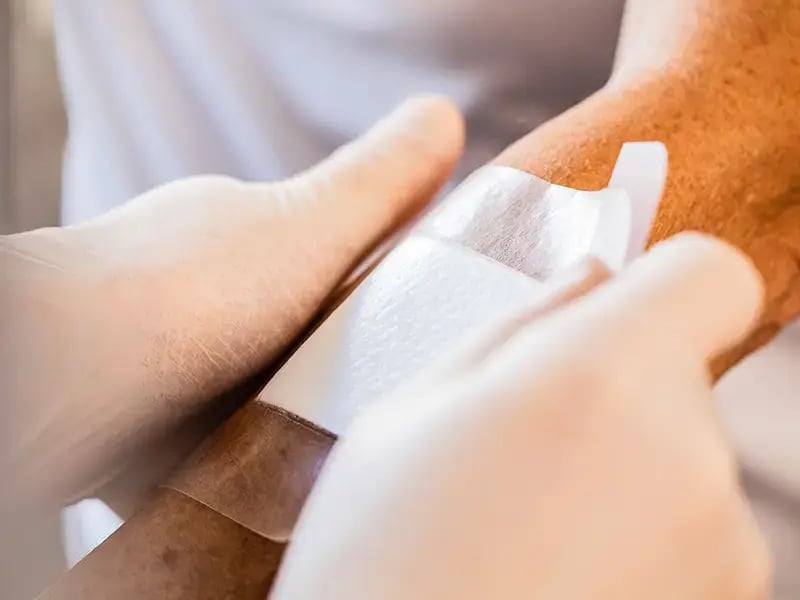



Wound Care at Home

Has your wound been slow to heal for weeks?

A chronic wound needs more than just a bandage. What matters most is expertise, clear procedures, and care tailored to the wound and your daily life.

SpitexCare offers specialized wound care at home. We assess the wound, support the healing process, and coordinate treatment closely with your primary care physician and the wound care experts at Rodday.

Close-up of Wound Care
  • Within 24–48 hours

    On-site. Rapid response following consultation with a physician.

  • Rodday

    Collaboration with Rodday's specialized wound care experts.

  • 1

    Having a designated contact person ensures continuity rather than constantly changing specialists.

  • 1 for 2

    A combination of general nursing care and wound care expertise.

Does this sound familiar?

  • The wound won't heal despite treatment.

  • The treatment keeps changing.

  • Changing the dressing is scary or causes pain.

  • The wound has an unpleasant odor or oozes heavily.

  • You feel uncertain and overwhelmed.

Chronic or complex wounds take a toll not only on the body but also on quality of life and your social environment.

You don’t have to manage wound healing on your own.

Specialized Wound Care in a Familiar Environment

SpitexCare combines the strengths of an established home care service with specialized wound care expertise.

Wound care on a patient's neck provided by Spitex
A nurse and a patient laugh together
  • Portrait of Marcel Klinkosch by spitexCare

    Our goal is to bring structure to treatment, provide professional support throughout the healing process, and ease the burden on family members.


    Marcel Klinkosch

Among other things, we supply:

Chronic wounds (4–6 weeks or longer)

Pressure Ulcers

Ulcer / Open Leg Wound

Heavily oozing or painful wounds

Burn injuries that Are difficult to heal

Epidermolysis bullosa

Our approach is clear and structured:

  • 1

    Getting in touch

    You can describe the situation to us by phone or by filling out the form.

  • 2

    Coordination with the Family Doctor

    Collaboration with the family doctor is an integral part of our process.

  • 3

    Initial assessment at your home

    A professionally sound assessment of the wound condition.

  • 4

    Structured treatment proposal

    Transparent, clear, and coordinated.

  • 5

    Organizing the necessary materials

    We'll take care of the coordination.

  • 6

    Regular monitoring

    Monitoring, adjustment, and documentation.

  • 7

    A Caregiver Who Is as Consistent as Possible

    Continuity fosters trust and security.

Professional partnership in home wound Care

Complex wounds require experience, structured approaches, and continuous professional development. SpitexCare works in partnership with the specialized Rodday Wound Care Center in the field of wound healing.

SpitexCare Logo
Rodday Wound Management Logo

This collaboration makes it possible to:

  • Professional exchange on complex wound cases
  • Access to specialized expertise
  • Quality assurance for complex processes
  • Continuous professional development for our employees
Mehr anzeigen

Support for wound care provided by family members

Many family members say:
“I’m afraid of doing something wrong.”

Our role is not only to care for the wound but also to ease the burden on those around the patient.

We explain, guide, and clarify the next steps. We’re happy to advise you on costs, terms, and formalities.

For our patients, this means:

Care that is not provided in isolation, but is supported by expertise and professionally supervised.

Our goal is to combine specialized wound care in the home setting with a clear structure, expertise, and collaborative partnership.

What can you expect from us?

Transparent communication icon showing 2 speech bubbles

Transparent communication

Icon displays a list with checkmarks

Clear procedures

Icon shows a college cap

Professional expertise

Icon shows a heart-shaped handshake

Treating others with respect

Icon shows 3 people

Collaboration based on partnership with all stakeholders

Let's take a look at the situation together

An initial consultation is non-binding.
Together, we’ll determine what the next steps should be.

Portrait of Marcel Klinkosch by spitexCare

Frequently asked questions about wound care at home

  • When is a wound considered chronic?

    A wound is considered chronic if it takes longer than six to eight weeks to heal or does not show clear improvement during that time. It remains open, heals very slowly, or repeatedly worsens. Factors such as diabetes, vascular disease, pressure sores, or bacteria often slow down wound healing.

  • Do I need to worry about doing something wrong?

    No, there’s no need to worry. The important thing is not to try to treat a wound on your own for too long. If the wound isn’t healing, is oozing more, has an unpleasant odor, or is causing increased pain, you should seek professional help.

    At home, you can support the healing process by making sure your hands are clean, keeping the environment clean, and minimizing pressure on the affected area. Once healthcare professionals take over wound care, you should leave the treatment of the wound to them.

  • Do I absolutely need a doctor's prescription?

    Yes. Wound care is provided in coordination with the patient’s primary care physician. The physician remains involved in the medical care and coordinates the treatment together with the wound care specialists to ensure that the wound healing process is planned and monitored in a medically sound manner.

  • How soon can you get started?

    As a rule, wound care can begin within 24 to 48 hours after consultation with a doctor. This allows for a prompt assessment of the wound and early professional support for the healing process.

  • How long does wound care take?

    The duration of wound treatment depends on the type, size, and cause of the wound. Chronic wounds often require continuous and structured wound care over several weeks or months.

    It is important to regularly assess wound healing and adjust treatment as needed. Our goal is to provide professional support for healing, alleviate symptoms, and avoid interruptions in treatment as much as possible.

  • Does health insurance cover the costs?

    Coverage for wound care is provided in accordance with a doctor’s prescription and the health insurance provider’s guidelines. The usual deductibles generally apply to Spitex visits. Some supplies may not be fully covered. We make sure to use reimbursable supplies whenever possible and will discuss the next steps with you.

  • What happens if the wound gets worse?

    If the wound worsens or healing does not proceed as expected, the treatment is reassessed. Our wound care specialists closely monitor the wound’s progress, inform the primary care physician of any changes, and coordinate the next steps with him or her.

    Depending on the situation, wound care is adjusted—for example, by using different dressing materials, relieving pressure on the affected area, or conducting further evaluations. This allows for a quick response if the wound starts to ooze more, causes increased pain, or isn’t healing as expected.