Living with multiple sclerosis - accepting help is not a weakness
Accepting help does not mean relinquishing control. Quite the contrary: those who seek out targeted support create space for themselves, gain security and strengthen their self-determination.
Blogbeitrag anhören
Why is it difficult to accept help?
Many people with MS think that they have everything under control. This is often based on very human feelings.
-
Shame: Nobody wants to be a "burden".
-
Fear of dependency: the worry that they will no longer be able to make their own decisions.
-
Pride and self-image: You're not a care case after all.
-
Insecurity: "Will everything be taken out of my hands?"
These reactions are normal. They show how valuable autonomy is to you. And that's exactly why it's worth rethinking help. It should be a tool that protects your self-determination.
Help means retaining control
Help can be dosed - as much as necessary, as little as possible. You decide where it relieves you and remain in control. Used correctly, support creates space for what is important to you instead of taking something away from you.
-
Energy for the essentials: When household chores or personal care no longer require all your energy, there is room for family, hobbies or exercise.
-
Targeted use of your resources: You decide where support is needed - and what you use your energy for.
-
Flexible and self-determined: Support can be adapted to your daily form, goals and progress - from occasional to regular, anything is possible.
When is it time to get support for MS?
Ideally, before your limits are exceeded on a daily basis. There are signals that you can use as a guide. You may recognize yourself in some points - organizing early is proactive, don't "give up".
-
Fatigue is increasing - recovery breaks are no longer enough.
-
Unsteadiness when walking, fear of walking or falls can be a sign.
-
Routine tasks such as cooking, washing and cleaning become tedious or are left undone.
-
Relatives carry more and more, are tired or at their limit.
Options for support at home
There are various ways to get support, which can also be combined and suitable for your life.
-
Family and friends: Practical help in everyday life, as long as it is not excessive.
-
Respite services: Support for a few hours, accompaniment to appointments, company or activities
-
Public Spitex: Medical and nursing services as required. This is only available with a doctor's prescription.
-
Private Spitex: flexible and individual support - from housekeeping and basic care to companionship. This is also possible without IV level. The scope of services can be freely agreed.
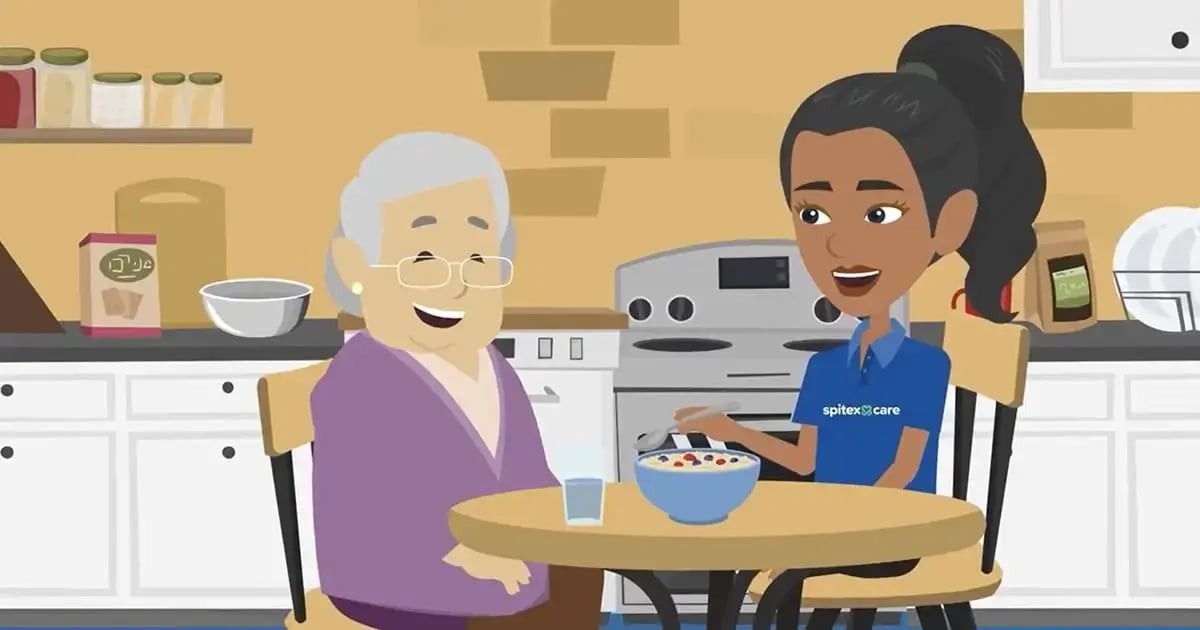
SpitexCare offers flexible assignments according to your priorities. Without pressure, at eye level.
What do I gain by allowing help?
Help is a resource, not a flaw. It creates stability, security and more quality in everyday life - for you and your loved ones.
-
Energy for what counts: Time for family, friendships, work, training - instead of exhaustion.
-
More safety: fewer falls, fewer crises, faster response when something happens.
-
Dignity & professionalism: Intimate situations are handled respectfully and competently - this takes the pressure off relationships.
-
Relationship quality is maintained: Partners/relatives do not have to take on "everything" and can once again be more of a partner instead of a "caregiver".
Self-determination does not mean doing everything alone. It means consciously choosing what is good for you - and shaping support in such a way that it strengthens you. You don't have to carry everything alone. We would be happy to show you how you can get support that suits your life - on an individual basis.
Would you like to discuss without obligation which support suits your everyday life? We'll listen and show you options - at your own pace.